 Verified
Verified
Verified
Cotton carries a different rhythm, one that begins in the soil, shaped by sun, water, and time. It is a fiber that asks for patience from the very beginning, long before it ever touches the skin.
Our cotton is grown by farmers who are both Climate Beneficial™ certified and GOTS certified organic, ensuring a standard that honors both the earth and the people connected to it. These farms go beyond simply avoiding harmful chemicals, they actively restore the land.
Through regenerative practices, farmers build healthy soil that captures carbon, supports biodiversity, and retains water naturally. No synthetic pesticides, no toxic fertilizers, only methods that work in harmony with nature. Each cotton plant is given the space and time it needs to grow slowly, strengthened by the ecosystem around it.
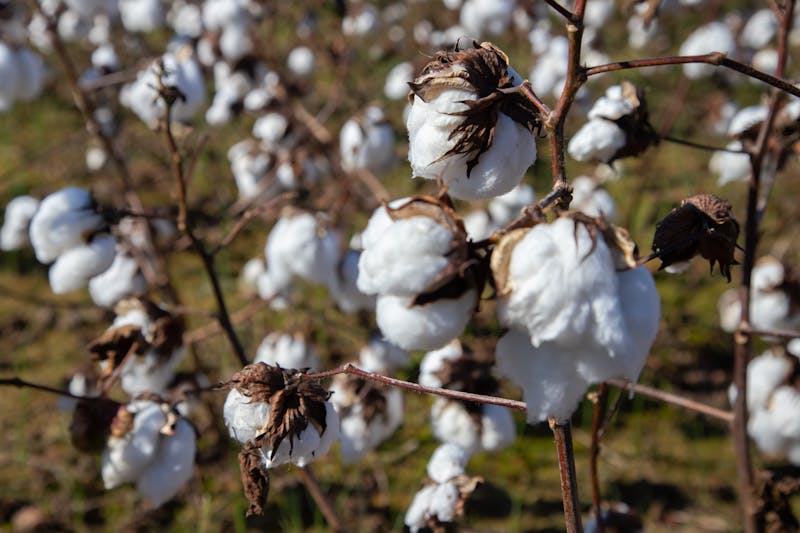
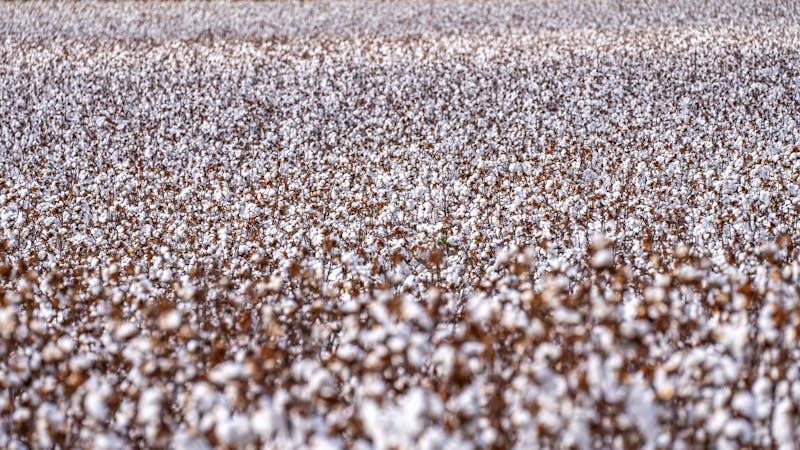
Cotton begins as a seed, planted into nutrient-rich soil. With sunlight, water, and care, the plant grows into a flowering shrub. Over time, these flowers transform into cotton bolls, protective pods that hold the soft fiber within.
As the season matures, the bolls naturally open, revealing the raw cotton in its purest form... soft, cloud-like, and ready to be gathered.
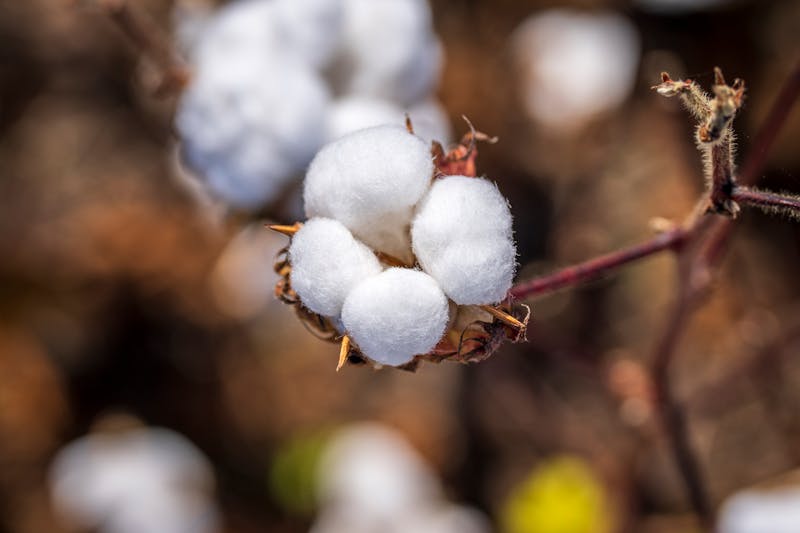
Cotton is harvested once the bolls have fully opened. Depending on the farm, this may be done by hand or with gentle, low-impact machinery. The timing is intentional, ensuring the fiber is collected at its peak without damaging the plant or the surrounding land.
After harvesting, the cotton goes through a process called ginning. This step separates the soft fibers from the seeds and any remaining plant material. What remains is raw cotton fiber, clean yet still close to its natural state.
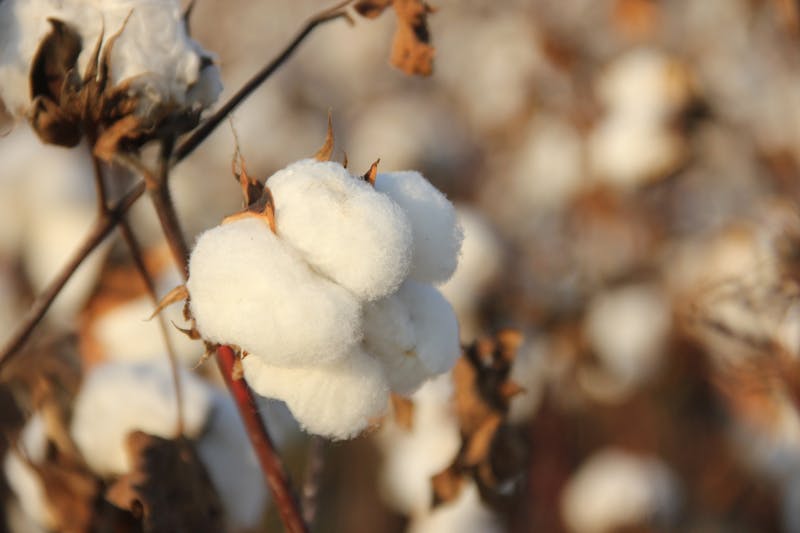
The cotton is then gently cleaned to remove any remaining impurities such as dust or small fragments. This step is done with care to preserve the integrity and softness of the fiber.
Once cleaned, the fibers are carded, brushed into alignment to create a smooth, continuous strand. This transforms the cotton into a form that can be easily spun, while maintaining its natural breathability and softness.
The aligned fibers are spun into yarn, where they are twisted into strong, versatile threads. Cotton yarn carries a different quality, lightweight, breathable, and adaptable, making it ideal for everyday wear.
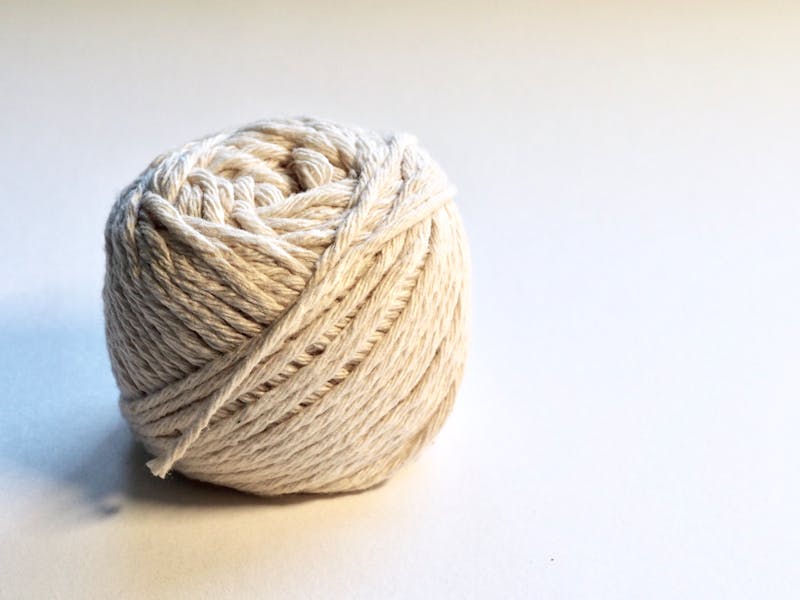
Cotton can also move beyond yarn into fabric through weaving or knitting. In weaving, yarns are interlaced on a loom to create structured textiles, crisp, durable, and timeless. In knitting, yarns are looped together to form softer, more flexible fabrics with natural stretch. Both methods shape how the cotton will feel, move, and live on the body, allowing the material to take on different expressions while remaining rooted in its natural origin.
When color is desired, we turn to nature. The yarn is dyed using plant-based elements... flowers, bark, leaves, roots, seeds, and acorns. These natural dyes create tones that are subtle, earthy, and alive, free from synthetic chemicals and safe for both the body and the environment.
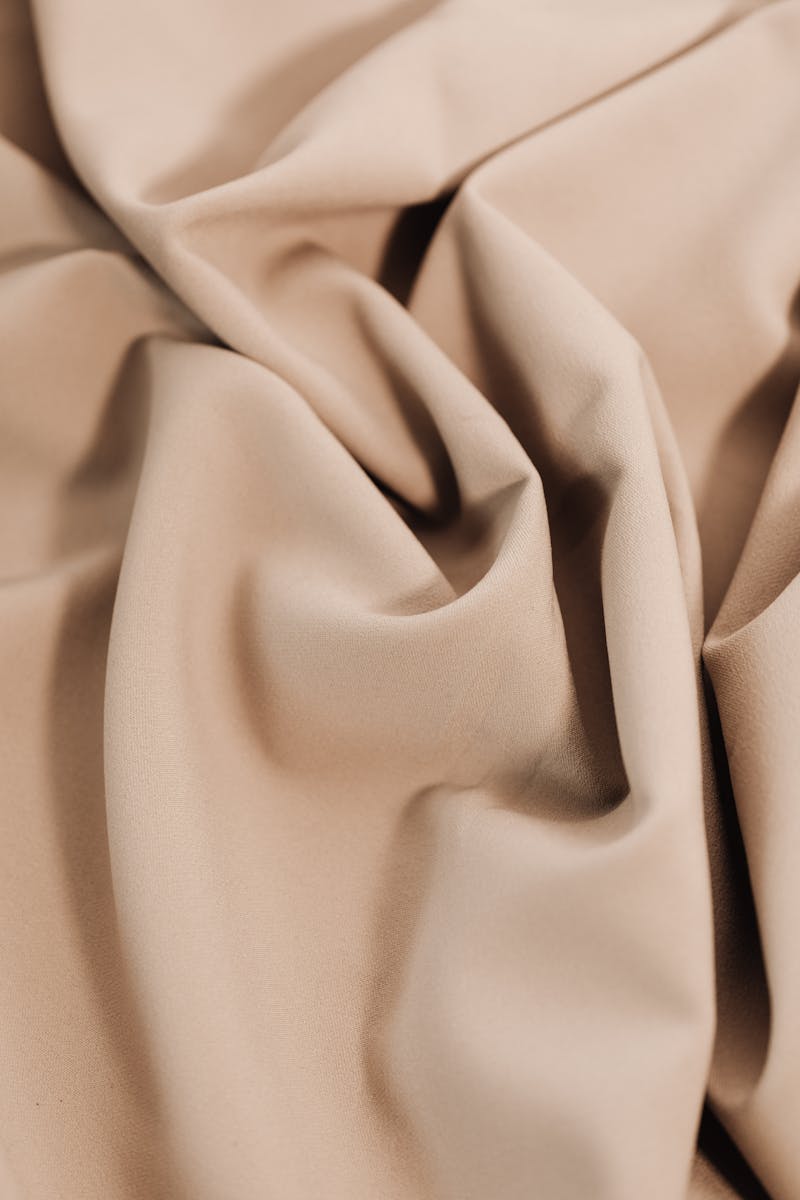
Before becoming a garment, the yarn is developed into swatches. These samples allow us to study how the fabric feels, how it drapes, and how it holds over time. This step ensures that every textile meets our standards of comfort, durability, and intention.
With clarity and care, the yarn is transformed into its final form. Whether knitted, crocheted, or stitched by hand or with gentle, low-impact machines, each piece is created slowly, honoring craftsmanship over mass production.
What you wear is more than cotton. It is the result of conscious farming, patient growth, and intentional making. A fiber shaped by the earth, designed to live with you.