 Verified
Verified
Verified
Linen is one of the oldest fibers known to humanity, woven from the stalks of the flax plant. It carries a quiet strength, a fabric that only grows softer with time, shaped by sun, rain, and centuries of tradition. Our linen is sourced from heritage flax farms that honor the land and the craft behind every thread.
Flax is a remarkably self-sufficient crop. It requires no irrigation, thriving on rainwater alone. It needs no synthetic pesticides or fertilizers, growing in harmony with the soil rather than depleting it. A single hectare of flax absorbs more than 3.7 tons of carbon dioxide each year, making it one of the most climate-positive fibers in the world.
Our flax is grown by farmers who are Climate Beneficial™ certified, a standard rooted in regenerative land practices, transparent traceability, and the long-term health of the ecosystem. Their fields are managed through careful crop rotation, strengthening the soil for years beyond each harvest. When the flax is pulled from the ground, the roots remain, naturally enriching the earth for seasons to come.
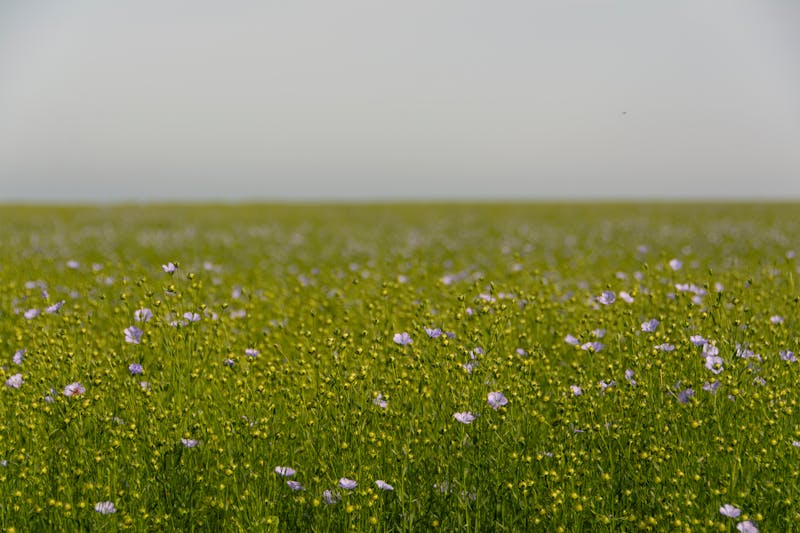
Flax begins as a small seed, planted into cool, well-drained soil. Within weeks, the field transforms, rows of slender green stems rising toward the light. In early summer, delicate blue flowers appear across the field, blooming for only a few days before giving way to seed pods. It is a brief, beautiful moment in the plant's life, one that marks the beginning of fiber readiness.
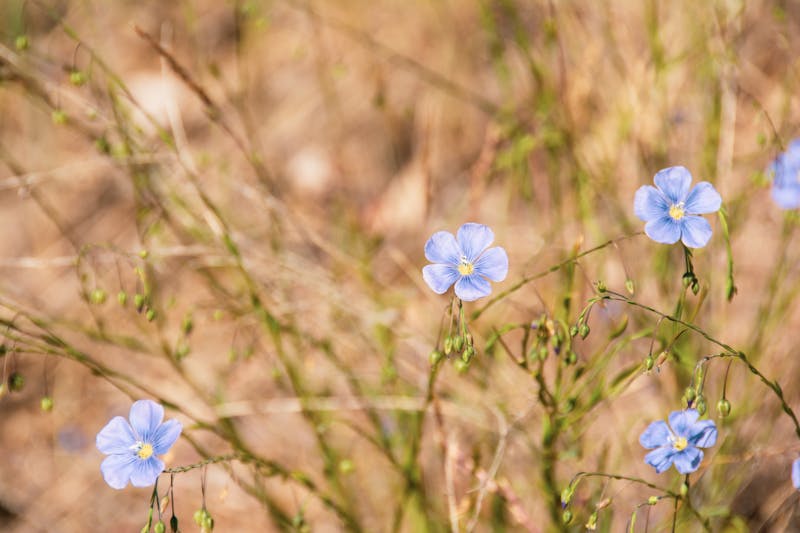
Unlike most crops, flax is pulled from the earth rather than cut. This preserves the full length of the fiber, from root to tip, and ensures the highest quality linen. The timing is intentional, harvested just as the lower stems begin to turn golden, when the fibers are at their strongest and most refined.
After harvesting, the flax stalks are laid across the field and left to rest. Over the following weeks, morning dew, rain, and naturally occurring microorganisms slowly break down the outer bark of the stalk, loosening the fibers held within. This process, called retting, is one of the most ancient and patient steps in all of textile making. It cannot be rushed. Nature sets the pace.
Once retted, the dried stalks are gently crushed to break apart the woody core. The fibers are then separated through scutching, a careful process of scraping away the remaining plant material. What emerges are long, silky strands of raw linen fiber, still close to the earth they came from. Nothing is wasted. The leftover woody material is used for mulch, animal bedding, or natural building materials.
The raw fibers are combed through a series of fine pins, a step called hackling. This aligns the fibers, removes any remaining short strands, and produces a smooth, continuous bundle ready for spinning. It is a refining process, bringing order and clarity to what nature grew freely.
The hackled fibers are spun into yarn, twisted into strong, enduring threads. Linen yarn carries a distinctive quality, crisp yet deeply alive, with a natural texture that softens beautifully over time.
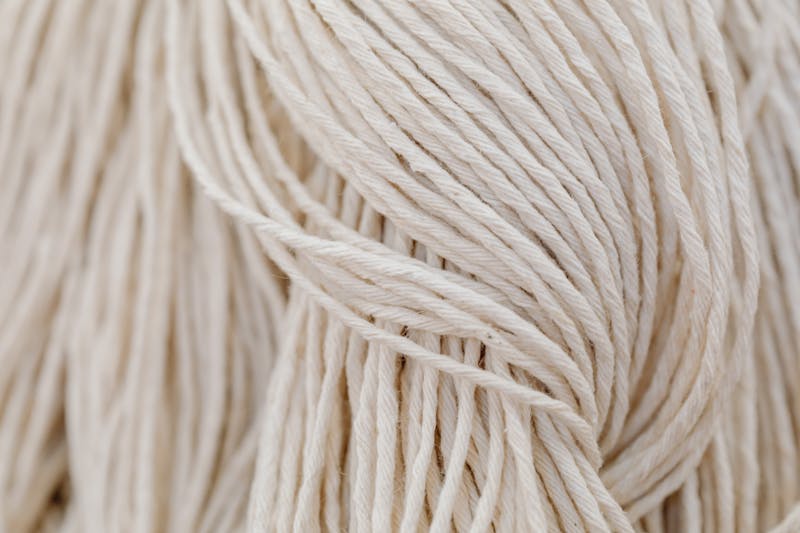
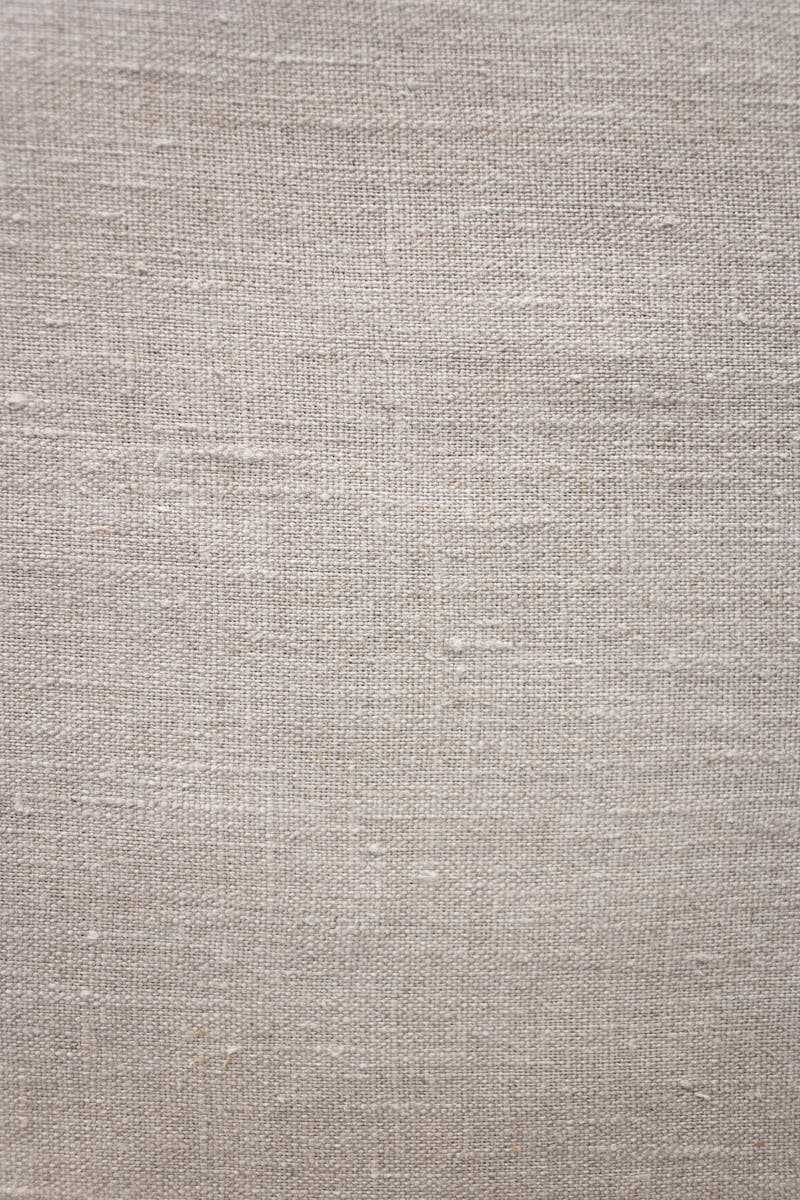
The yarn is woven into fabric, most often in a plain weave where threads cross over and under one another in a simple, timeless pattern. The result is a textile that is breathable, durable, and naturally temperature-regulating, cool in summer and warm in winter. Linen fabric improves with every wash and every wear, becoming softer and more graceful as it ages.
When color is desired, we turn to nature. The yarn is dyed using plant-based elements... flowers, bark, leaves, roots, seeds, and acorns. Linen, as a cellulose fiber, requires a patient approach to dyeing, first prepared with natural tannins, then slowly immersed in the dye bath. The colors that emerge are subtle, grounded, and alive, each one a reflection of the landscape it came from.
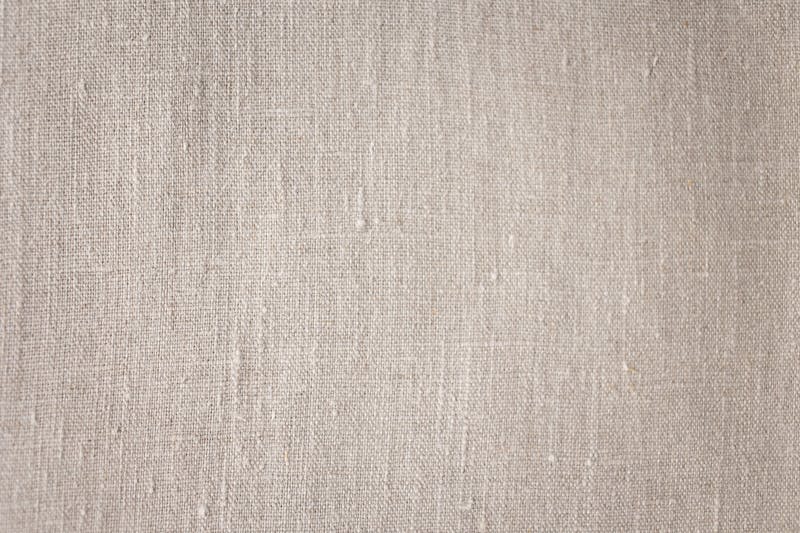
Before becoming a garment, the fabric is studied. Swatches are created to observe how the linen drapes, how it responds to the body, and how it holds its character over time. This step ensures that every textile meets our standards of comfort, integrity, and lasting beauty.
With care and intention, the linen is shaped into its final form. Whether stitched, woven, or constructed by hand or with gentle, low-impact machines, each piece is created slowly, honoring the centuries-old tradition of working with this extraordinary fiber.
Linen does not wear out. It wears in. With every wash and every season, it becomes softer, more personal, more yours. What you hold is more than fabric. It is the result of patient farming, ancient craft, and a fiber that has been trusted by humanity for thousands of years.